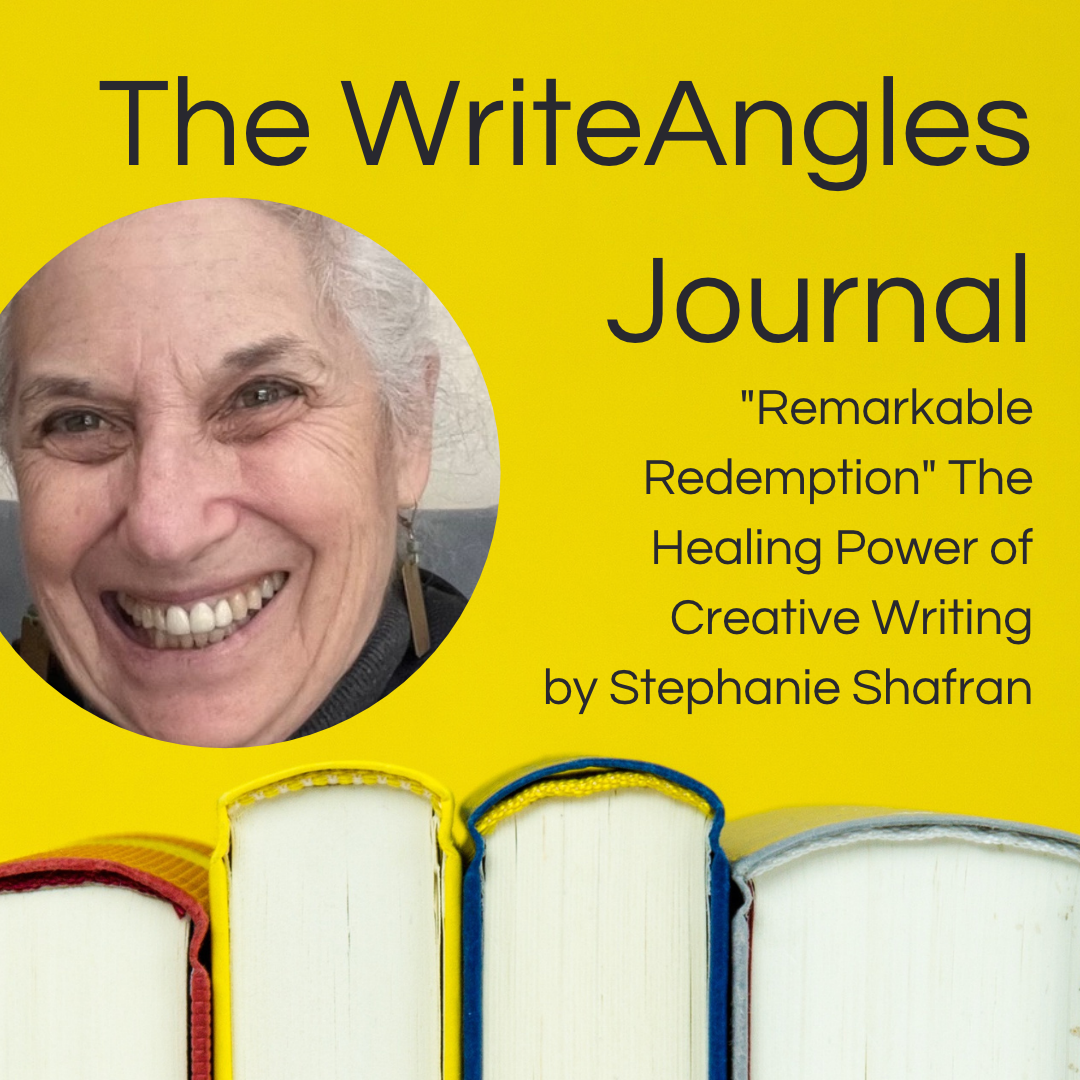
Stephanie Shafran reminds us eloquently of the power of writing to change our lives.
“Remarkable Redemption-The Healing Power of Creative Writing”
by Stephanie Shafran.
Some years ago, I read an article by Zawn Villines in Medical News Today explaining the therapeutic role writing may have in a person’s life. Writing repeatedly about painful memories can change how we understand them. Psychologists call this process ‘cognitive restructuring.’ It turns out that the repeated act of writing about our most upsetting memories from different angles affects not only the way we think about these memories in the present, but how our body feels as we remember our past.
As a girl, reading books and writing in my journal were coping strategies that helped me manage chronic stress often threatening to drown me in sadness, anger, and confusion. Even before my father’s suicide, our family was not thriving. The most frequent communication pattern was either silence or anger. My mother struggled mightily to tolerate her own fears and insecurities without translating them into rage or brooding. My father’s dramatic mood swings, due to his undiagnosed bipolar disorder, confused and unsettled me. Whether he’d arrive home from work and go straight to bed, or read me a bedtime story, was never predictable.
For years, my journal entries were filled with accusations and insults, most often aimed at my mother. Her shaky self- esteem worked like a poison infecting the emotional health of everyone closest to her.
How could I have known that these cathartic rants would serve me well as an adult? And in ways I couldn’t possibly have fathomed at the time they were written? Or that my feelings towards her would alchemize into a blend of curiosity, affection, compassion, and even admiration decades later, when I took on a caregiving role the last decade of her long life?
Through my life-long poetry and prose writing on the topic of my father’s fateful decision to end his life, I’ve journeyed with him, toting my own range of emotions––from deep sadness, agonizing regret, debilitating confusion, to compassionate acceptance.
The article I mentioned earlier states that writing is just another form of problem solving. Without realizing it, writing the story of my life repeatedly over the years has been just that––an attempt to solve existential problems confronting me throughout my life. Barring that lofty goal, writing has certainly guided my understanding of them from a prism-like perspective.
Through my writing, I’ve finally discovered the treasure so long buried from me—trustworthy peace of mind, spirit, and body. Sometimes I call it a remarkable redemption.
http://medicalnewstoday.com/articles/cognitive-restructuring#summary
Stephanie Shafran, a member of Florence Poets Society as well as SDWG, retired in 2017 from a dual career as a Spanish teacher and school counselor. Since then, she has found her identity and community as a writer, much to her satisfaction and delight. In 2020, she published a chapbook titled Awakening. Her most recent publication, a flash fiction essay related in content to her memoir-in-progress, was published in the September issue of The Sun.