Welcome to member Stevie Billow’s continued interview series with Straw Dog Writers Guild members. This month Stevie interviewed author and member Joy Deva Baglio.
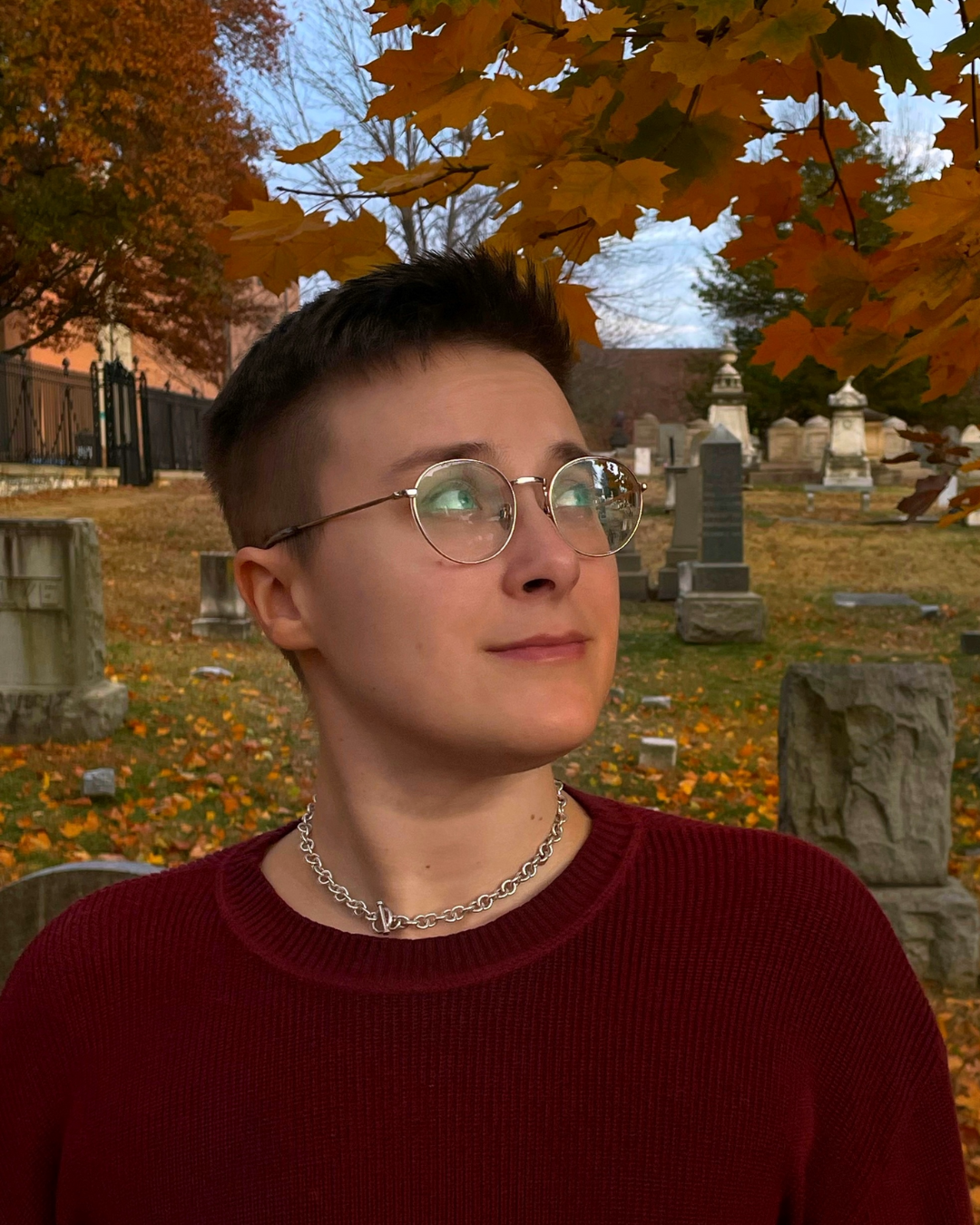 Stevie: It’s an absolute pleasure to be interviewing you on behalf of the Straw Dog Writers Guild! To kick us off, I’d love to talk about fairy tales. As a speculative fiction writer, many of your short stories are inspired by and/or told in the tradition of fairy tales. What draws you to this subject matter and mode of storytelling?
Joy: Growing up, we had a library’s worth of children’s books, collected over years by my mother, many of which were fairy tales.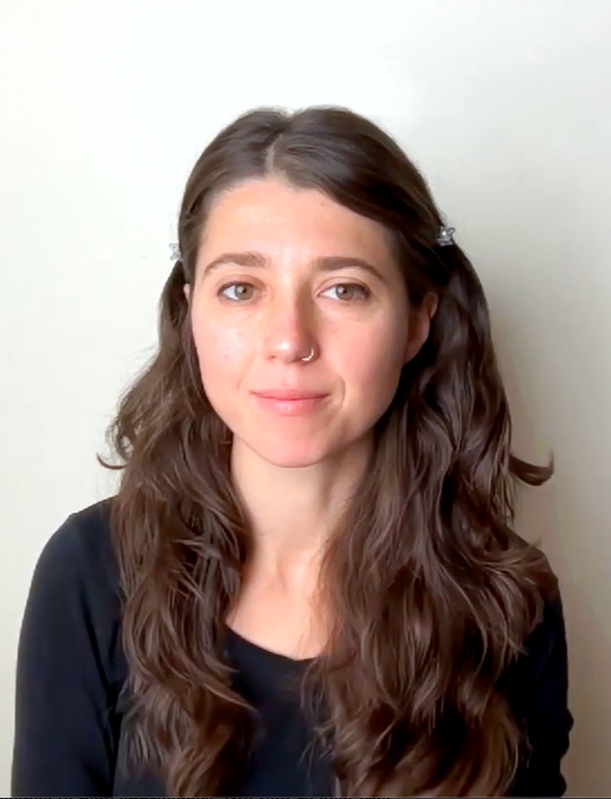 My sister and I were always reading and re-reading them. I’ve always been drawn to fairy tale logic: what works, what eventually opens the door, tricks the gods, defeats the witch, breaks the spell, etc. isn’t what we think it will be, isn’t necessarily logical, even though on an emotional level we get it.
I like the way fairy tales don’t flinch in showing the true stakes of a situation, the deep struggle, the peril. They don’t hold back, are not saccharine or sugar-coated, and there’s something I think children (and all of us) respond to in that honesty. Cinderella’s stepsisters cut off their heels and toes to fit into the shoe, to fool the prince. Vasilisa the Beautiful completes tasks for Baba Yaga all under the threat of being eaten, Baba Yaga’s house surrounded by the burning eyes of skulls. These stories could be read as terrifying, hopeless, overly dark, yet these impossible situations so often give rise to characters who manage to summon unexpected strength, fortitude, perseverance in the face of their challenges. Again, there’s something that defies logic, defies what should be possible, says, “what if there’s another way? What if we don’t know everything we think we know?” So actually, I find fairy tales incredibly hope-filled because what’s more hopeful than finding out that the rules are not what we thought they were, that boundaries can be reshaped, transmuted?
Stevie: Do you have any specific fairy tales or fairy tale motifs that you find especially fascinating? If so, why?
Joy: As a child, I was obsessed with a book of Russian fairy tales (and the accompanying illustrations by illustrator Ivan Bilibin). I loved Grimm’s fairy tales, Hans Christian Andersen, Oscar Wilde, Norse mythology, Greek mythology, the Scottish legend of Tam Lin, which tells the story of a mortal man rescued from the clutches of the fairy queen by the woman who loves him. Another particular favorite was the ancient Indian myth of Savitri and Satyavan, from the Vana Parva, the third book of the Mahabharata, wherein a princess outwits the god of death to save her husband. I think about these kinds of stories a lot, and they’ve had a large impact on my own writing: characters who defy a given set of rules (or realities), who are relentless in the face of the near-impossible.
I love so many of the fairy tale motifs too: talking animals who come to the aid of those who’ve helped them; promises and how they almost always get corrupted or misunderstood (my contemporary fairy tale “Frog Heart,” in Ploughshares, was actually inspired by this idea). I love repetition, the use of magical numbers (three, seven, nine), impossible tasks; portals, thresholds, and hidden doorways; riddles; given (and granted) wishes; magic (or cursed) talismans, haunted houses – can I keep listing?!
So many of these tropes are satisfying in an almost juicy way. I love when a story can give these small satisfying delights, as well as some larger, more nuanced meaning, and of course when it taps into something that feels bigger, universal, as if the truth the story is exposing exists in a realm just outside of it.
Stevie: You write short stories, flash fiction, and you’re working on novel-length manuscripts. That’s quite a range! How has crafting fiction of various lengths impacted you as a writer?
Joy: The different lengths really do feel like separate muscle groups that are stretched and developed differently, namely by practicing those forms.
I’ve been working on stories of all different lengths since childhood (even two novels written in high school!), so I’ve always had projects of different lengths in the works. Though the way I learned the ropes, so to speak, was through studying and writing short stories in college, then grad school, then in other workshops wherever I could get in – so that feels like my native language, where I have the most control. I came to flash fiction out of frustration with several longer story ideas that weren’t working and decided to pare them down to the sparsest nucleus I could, while still retaining what I liked about the idea.
Writing flash fiction and short stories has given me a sense that I can complete stories; I can go through the process and produce something, because, well, I have. Each time this happens, it reinforces trust in the process. So it’s not necessarily that short fiction is easier (because I think it certainly has its own challenges, for example, it has less room to hide, for one) but that it’s easier to go through the full process many times, and hence that form (short stories) is easier to practice.
For the last few years, my focus has been on my (unfinished) novels, and that process (and the difficulty) has given me tremendous respect for anyone who can write a novel, much less a good novel. I think it’s much harder to develop a sense of trust in the novel-writing process, simply because of the length.
Stevie: Do you have any rituals that assist in your writing process? For example, do you play music while you write or go for long walks to reflect on a piece’s plot?
Joy: My regular writing ritual is just me at the kitchen counter, with coffee, every morning before other work and responsibilities press in on me. I also tend to get up and pace, in circles or around our kitchen’s island counter when I’m thinking. I need to move, walk, or dance to get ideas out, or in my most inspired, energized states. I also tend to think through plots when driving, and I use voice memos on my phone to record ideas or dictate text. I like that voice recording forces a messiness that can un-paralyze anyone with a perfectionist past, and that recording is just a process of talking it out with yourself, in whatever form you can get the words out.
Stevie: In addition to being a writer yourself, you’re also the founder and director of the Pioneer Valley Writers’ Workshop. What inspired you to establish this organization?
Joy: I had recently moved to the valley from NYC (in 2015), and beginning PVWW was part of my effort to branch out, get to know the writers of the area, and offer something to the community that might inspire others. I was newly inspired by some of the authors I’d recently studied with (Rebecca Makkai and Aimee Bender at Tin House), so there was a little bit of a domino effect there. I’d been a high school teacher a few years ago in NYC, so it didn’t feel so outside my wheelhouse. It’s a human instinct to form communities around the routines in our lives we want to strengthen, and I was very much influenced by that idea as well. There’s no better way to feel motivated and accountable to what you’re trying to become than to be part of a community with others also doing that.
Stevie: What role does literary community play in your writing life?
Joy: A very big role! And recently I’ve been thinking about how many communities I’m a part of, even just within the literary world, and how important each is to me: there’s PVWW and the Western MA writing community, which I’m most involved with – but within PVWW, there’s also sub communities: instructors, students, the Manuscript Program, Community Writing. Every time I’ve been to a conference (Bread Loaf, Sewanee, Tin House) or a residency (Yaddo, Ragdale, Vermont Studio Center, The Kerouac Project) there’s been a unique and wonderful community that I’ve become a part of that sustained me at that time in my life. I still miss them all, though many friendships have continued beyond those times. There’s also the various communities of social media, which for all its frustrations, is actually full of inspiring people and a lot of lifting each other up, sharing work, sharing inspiration, processes, random thoughts. Each platform has its own community (Substack, Blue Sky, Meta, Instagram are my main ones).
Joy: I’d say community – all of these – plays the role of motivating me to just keep going, to finish projects, to try to get new work out there, to keep doing what I feel I’m meant to do. We all hold each other accountable. That’s honestly the biggest role I think community does for its members: we’re not in this alone, we’re all trying to hold each other up, the struggle is real, but we can do it. When one succeeds in a community, it lifts the whole up, shows others what’s possible.
Speaking of community and accountability: I recently had the idea, after a few very early pre-dawn writing sessions, to create a Pre-Dawn “Darkest Hour” Writing Club, for writers wanting to wake up before dawn to hammer out words and finish projects, and the response (via social media) was pretty enthusiastic – including many established authors I deeply admire. It dawned on me (pun intended): these established, successful authors – people of all stages of writing career, with all kinds of goals and deadlines – are ALL leaning on each other to keep going. It doesn’t get easier just because something gets published. The process is hard as ever, and the grit it takes is the same, and we’re all still in need of support and accountability. If you’re interested in joining the Darkest Hour club, get in touch with me at www.JoyBaglio.com!
Stevie: Can you tell us a bit about the writing projects you’re currently working on?
Joy: I’ve either been blessed or cursed with having many ideas competing for my attention at once, and that’s turned into multiple in-progress novels, currently three, each (now) upward of 40K words, and more short stories than I can keep track of. It can feel like a game of Whack-a-Mole in my head sometimes. I work across all of them, jumping between them, remaining in one for as long as I can, before jumping to another, and this process goes back and forth. The space I take from each tends to help me solve plot problems, and each is better for it rather than if I strong-armed my way through. I often get insights on a problem in one of the projects I’m not currently working on, which prompts me to return to it – but those insights only come when I’m not beating myself up over how to solve it. I’ve learned over the years that I have to write from a place of genuine curiosity, excitement, and zeal – that’s when my best writing happens (not from frustration, dread, or something being forced). My plan is to have four books (three novels, one story collection) ready for first readers in the near-ish future. (I’ve been stating this various places to better hold myself accountable!) I’m also beginning a big effort to revitalize my craft Substack – Alone in a Room – which I’m excited about.
Stevie: You’ve been widely published in several celebrated literary magazines! Do you have any advice for our readers who want to see their own writing in more competitive publications?
Joy: Yes, there are several things I’d advise anyone wanting to see their work out there to internalize, especially if they want to get into more competitive lit mags (I will also be covering this in an upcoming Alone in a Room post in more depth):
1) Revise ruthlessly; take space between drafts; revise again. And be okay with this process taking years (because it likely will). Getting the work to a level where it’s hard for an editor to say no is the goal; publishing in top-tier journals will always be selective and competitive and hard, but if the work is at that level, it becomes a lot more likely. So mastering craft, taking space from the work in between drafts, pushing it as far as you can – that’s all most important.
2) Get feedback. When you’ve taken the work as far as you can, seek out astute first readers, people who are not your family or closest friends, whom you’ve seen in action giving rigorous, helpful feedback to others and whose literary judgment you respect. It’s important to have these readers to reflect back to you their experience of your work – not so that they can prescribe to you what needs to happen, or so you can scramble to change everything they say (please don’t!) – but so that you can weigh it all, and then go back to the revision drawing board.
3) Aim high. When you’re ready to send the work out, after all of that you really owe it to yourself and your work to know the market well (anyone with internet access can research this and learn almost everything there is to know about literary magazines) and to aim high with where you send your work, i.e. send it first to your “dream journals.” This doesn’t just mean sending stories to The New Yorker; it means studying the lists of literary magazines, who they publish, getting familiar with the landscape of each, figuring out where you’d love to see your work, and putting together a submission plan for yourself. Your top choice publications should always be where you submit first, then move down your list.
4) Be persistent. Yet even if you do all this (and especially if you aim high), the most selective journals are still highly selective and have to make hard choices. Rejection is something all writers face, and you will need to be able to pick yourself up even when your best work is rejected and do the exact same thing again and again, keep doing it, in fact, for years. I just had a story published as the December 2025 issue of One Story – a dream publication of mine – but it didn’t happen overnight, it’s been a decade-long process of being persistent. I started sending stories to One Story over ten years ago, and each of my best stories at the time – some of which had taken years to polish – was rejected by them (very kindly, with supportive words, but still rejected). I think writers need to believe fiercely in what they want for their work, and to see every rejection as just one more scar or badge on the path toward what they know they are meant for, if they do indeed know they’re meant for this. This kind of ferocity of belief is the bedrock of persistence.
5) Think about what you have to say, what you want to say, and what you can uniquely speak to / about. I think this is key, actually, to crafting work that is publishable – and resonant with readers. If you don’t know the answers to these questions yet, a good approach is to experiment with styles, voices, subject matters – just try everything, see what feels natural, where you feel pull and flow, as if you’ve drilled into a deep channel that keeps going. Explore what energizes you, scares you, fascinates you. When you’re engaged deeply in your own work – when you’re obsessed with the story you’re telling – there’s more of a chance other readers (and editors) will be too.
Joy Deva Baglio is a writer of speculative-literary fiction and the founder of the literary arts organization Pioneer Valley Writers’ Workshop, based in Northampton MA (and virtually). Her short stories appear widely in journals such as One Story, Ploughshares, The Missouri Review, The Iowa Review, American Short Fiction, Conjunctions, Tin House, The Fairy Tale Review, and elsewhere. Two stories have been optioned for film/TV. Her writing has been supported by fellowships, grants, and residencies from Yaddo, The Elizabeth George Foundation, Ragdale, Vermont Studio Center, Bread Loaf Writers’ Conference, Sewanee Writers’ Conference, The Speculative Literature Foundation, and The Kerouac Project, where she was the spring 2023 Writer-in-Residence living and writing in Jack Kerouac’s Orlando bungalow. Joy holds an MFA from The New School and is currently at work on multiple novels and a short story collection. She’s represented by Peter Steinberg, at United Talent Agency, and Sean Daily at Hotchkiss, Daily & Associates, for film/ TV. Joy lives in Northampton, MA, where she can also be found playing the bagpipes, running, and scheming up adventures. She writes a semi-regular Substack—Alone in a Room—on the craft of writing. Visit her online at www.JoyBaglio.com.